Category: News

Verifizierung und Auszahlung bei Online-Casinos: Die entscheidenden Faktoren für sichere und effiziente Transaktionen

Verifizierung und Auszahlung bei Online-Casinos: Die entscheidenden Faktoren für sichere und effiziente Transaktionen

In der heutigen Ära der digitalen Glücksspiele stehen Online-Casinos vor der Herausforderung, ein Höchstmaß an Sicherheit, Betrugsschutz und Benutzerfreundlichkeit zu gewährleisten. Ein zentraler Aspekt dabei sind die Prozesse der Verifizierung sowie der Auszahlung. Diese beiden Elemente bilden das Fundament für Vertrauen und reibungslosen Spielbetrieb, insbesondere für europäische Spieler, die Wert auf Datenschutz und schnelle Transaktionen legen. In diesem Artikel beleuchten wir die wichtigsten Trends, regulatorischen Anforderungen und Best Practices, wobei wir auch auf spezifische Anbieter wie Tony Spins eingehen, der für seine transparenten Verifizierungsprozesse und schnelle Auszahlungen bekannt ist.

Hintergrund: Die Bedeutung von Verifizierung und Auszahlung

Die Prozesse Verifizierung und Auszahlung sind kein bloßer Formalitäten, sondern essenzielle Sicherheitsmaßnahmen, mit denen Online-Casinos das Risiko von Betrug, Geldwäsche und unrechtmäßigen Zugriffen minimieren. Insbesondere in Österreich, wo der Glücksspielmarkt streng reguliert wird, sind klare Richtlinien und transparente Abläufe unabdingbar.

Verifizierung dient dazu, die Identität des Spielers zu bestätigen, um Geldwäsche oder betrügerische Aktivitäten zu verhindern. Die Auszahlung ist das finale Element des Spiels, bei dem das Casinokonto mit dem tatsächlichen Gewinn ausgezahlt wird. Eine effiziente Abwicklung stärkt die Kundenbindung und verbessert gleichzeitig die Reputation des Betreibers.

Wichtige regulatorische Vorgaben im österreichischen Glücksspielumfeld

Regulatorische Anforderung Beschreibung Relevanz
Identitätsnachweis (KYC) Prüfung der persönlichen Daten mittels Ausweisdokumenten, Adressnachweis etc. Obligatorisch, um Spielerschutz zu gewährleisten
Limits & Einzahlungssperren Festlegung von Einzahlungslimits und Verhinderung von Spielsucht Zur Risikoabschätzung und Schutz des Spielers
Auszahlungsüberprüfung Verifikation vor Auszahlung, um Identität erneut zu bestätigen Sicherung vor Betrug und Geldwäsche

Solche regulatorischen Vorgaben ermöglichen einen rechtlich geschützten und nachhaltigen Casino-Betrieb, der das Vertrauen der österreichischen Nutzer in die Plattformen stärkt.

Praktische Herausforderungen und innovative Lösungen

In der Praxis gestaltet sich die Verifizierung oft als zeitaufwändig, insbesondere wenn man auf manuelle Prüfungen angewiesen ist. Nutzer wünschen sich schnelle, digitale und sichere Verfahren, die den Einstieg und die Abwicklung der Ein- und Auszahlungen reibungslos gestalten. Hier kommen fortschrittliche Technologien ins Spiel:

  • Biometrische Verifizierung: Gesichtserkennung oder Fingerabdruck, um die Nutzer schnell und sicher zu identifizieren.
  • Automatisierte Dokumentenprüfung: KI-gestützte Systeme, die Ausweisdokumente in Echtzeit verifizieren.
  • Blockchain & Smart Contracts: Für transparente, fälschungssichere Transaktionen bei Auszahlungen.

Die Rolle von Anbietern wie Tony Spins

Ein Beispiel für einen modernen Online-Casino-Anbieter, der großen Wert auf diese Aspekte legt, ist Tony Spins. Hier wird besonderes Augenmerk auf transparente Prozesse bei der Auszahlung und Verifizierung gelegt. Das Unternehmen implementiert umfassende digitale Verifizierungsmaßnahmen, die innerhalb weniger Minuten abgeschlossen sind, wodurch Wartezeiten minimiert werden. Die Plattform nutzt außerdem sichere Verschlüsselungstechnologien und modernste Prüfverfahren, um Betrug effektiv zu verhindern und den Schutz der Kundendaten zu garantieren.

„Das Ziel ist es, eine Balance zwischen maximaler Sicherheit und maximaler Nutzerfreundlichkeit zu schaffen – eine Philosophie, die bei Tony Spins deutlich sichtbar wird.“

Ausblick: Innovationen für die Zukunft der Transaktionssicherheit

Die Branche entwickelt sich ständig weiter. Künstliche Intelligenz, biometrische Verfahren und die Nutzung der Blockchain-Technologie versprechen, die Prozesse von Verifizierung und Auszahlung noch sicherer, effizienter und benutzerfreundlicher zu machen. Für österreichische Nutzer ist es entscheidend, auf Plattformen zu setzen, die diese Innovationen übernehmen und transparent kommunizieren.

Fazit

Mit Blick auf die zunehmende Komplexität der regulatorischen Anforderungen und die steigenden Erwartungen der Spieler ist die Optimierung der Prozesse bei Verifizierung und Auszahlung essentiell. Anbieter wie Tony Spins setzen hier Maßstäbe, indem sie digitale, sichere und schnelle Abläufe bieten. Für österreichische Spieler bedeutet dies: Mehr Schutz, weniger Wartezeit und ein sicheres Spielerlebnis – ein Standard, der in der Zukunft weiter an Bedeutung gewinnen wird.
Innovative Alternativen im Schweizer Glücksspielmarkt: Ein Blick auf Betsamuro

Innovative Alternativen im Schweizer Glücksspielmarkt: Ein Blick auf Betsamuro

Der Schweizer Glücksspielmarkt befindet sich in einem ständigen Wandel – geprägt durch technologische Innovationen, regulatorische Anpassungen und sich verändernde Konsumgewohnheiten. Für professionelle Akteure und Glücksspiel-Enthusiasten gleichermaßen ist es entscheidend, sich über die verfügbaren Alternativen zu informieren, die den Markt bereichern und neue Chancen bieten.

Die Dynamik des Schweizer Glücksspielmarkts

Seit der Liberalisierung des Online-Glücksspiels im Jahr 2019 haben sich mehrere Anbieter, Plattformen und Geschäftsmodelle entwickelt. Während etablierte Firmen wie Swisslos und Lotterie Suisse weiterhin eine dominierende Präsenz aufweisen, öffnen sich zunehmend moderne Alternativen, um den veränderten Ansprüchen gerecht zu werden. Diese neuen Angebote sind häufig technikgetrieben, innovativ und auf eine jüngere, digital affine Zielgruppe ausgerichtet.

Die Bedeutung von zuverlässigen Ressourcen für Marktanalysen

In einem so komplexen und sich schnell entwickelnden Umfeld ist die Bewertung von Alternativen essenziell. Hierbei gewinnen spezialisierte Plattformen und Vergleichsseiten an Bedeutung, die umfassende Daten, Erfahrungsberichte und technische Einblicke bieten. Besonders interessant ist die Plattform Betsamuro Alternativen, die sich durch ihre Expertise und Aktualität hervortut, wenn es um die Bewertung der besten Glücksspieloptionen in der Schweiz geht.

Was macht Betsamuro zu einer vertrauenswürdigen Quelle?

Kriterium Details
Fachwissen Langjährige Erfahrung in der Analyse der Schweizer Glücksspielwelt
Transparenz Klare Kriterien für Bewertungen und unabhängige Tests
Informationsvielfalt Umfassende Übersicht zu Alternativen, Bonusangeboten, Plattformfunktionalitäten

Konkrete Beispiele, Daten, Nutzerfeedback sowie Brancheninsights untermauern die Empfehlungen auf Betsamuro Alternativen und unterstützen somit eine informierte Entscheidungsfindung.

Innovationstreiber: Digitale Features und regulatorische Entwicklungen

Moderne Glücksspielanbieter heben sich deutlich durch innovative digitale Features ab:

  • Live-Streaming von Wetten und Spielen
  • Personalisierte Nutzererfahrung durch KI-gestützte Empfehlungen
  • Sicherheit und Transparenz dank fortschrittlicher Verschlüsselungstechnologien

Gleichzeitig zwingt die kontinuierliche Anpassung an die regulatorischen Bestimmungen die Anbieter, nachhaltige Geschäftspraktiken und den Schutz der Konsumenten zu priorisieren. Plattformen wie Betsamuro Alternativen dokumentieren die Entwicklungen und bieten wertvolle Einblicke zu gesetzlichen Änderungen, Lizenzen und Compliance-Anforderungen in der Schweiz.

Fazit: Die Rolle vertrauenswürdiger Quellen für eine zukunftsweisende Glücksspielkultur

Der Schweizer Markt ist geprägt durch einen komplexen Mix aus etablierten Institutionen und innovativen Alternativen, die den Markt zukunftsfähig machen. Für Brancheninsider, Spieler und Regulierungsbehörden ist der Zugang zu verlässlichen Daten und objektiven Bewertungen essenziell. Hierbei spielt Betsamuro Alternativen eine zentrale Rolle, indem es qualitätsgeprüfte Informationen bereitstellt, die eine informierte Entscheidungsbasis ermöglichen und die Zukunft des Schweizer Glücksspiels aktiv mitgestalten.

Big Data Analitic Tools

Big Data Analitic Tools

Unlocking new insights from complex, vast, diverse, and massive quantities of data to accelerate digital transformation, innovation, and social sustainability is the primary objective of Big Data Analytics. It uses a palette of advanced techniques and approaches from emerging fields such as Data Mining, Machine Learning and Deep Learning for extracting valuable information. Various tools support and optimize knowledge discovery engineering.

In such a context, the short-term training aims to broaden the students’ interest in data-driven projects as a novel paradigm in Industry 4.0 and Society 5.0, by answering a series of questions:
 What acts in the Big Data value-chain paradigm?
 What are the key technologies behind Big Data Analytics (BDA)?
 What tools and software enable meaningful insight from big data?
 What tools and software can be used for BDA with no or minimal coding skills?

Besides these questions, the training provides practical guides to particular tools that support and automate end-to-end data analytics, from data collection, cleansing, and transformation through model building, evaluation, and tuning, to visualization and communication of results.

The training is competences oriented utilizing learning-by-doing and case-based methods. The course is offered to computer science students from University of Nis (Serbia), University of Library Studies and Information Technologies (Bulgaria) and University of Bielsko-Biala (Poland).

All information about this event can be found in 2022_Scientific Study_iBigWorld.

Article: Ensemble of RNN classifiers for activity detection using smartphone and supporting nodes

Article: Ensemble of RNN classifiers for activity detection using smartphone and supporting nodes

The dataset was provided for classification of activity using sensors placed in four places: waist, chest, arm and leg.

The dataset contains eight classes:

  • walking in normal paste, where legs and arms are moving without any luggage,
  • jogging in moderate paste, where limb movement is faster, and the body is moving more dynamically,
  • squats, where a person is performing squats in place and arms holding a balance,
  • jump, where a person jumps in place as a part of aerobic exercises,
  • laying, where a person is lying on his back, and major movement corresponds to chest breathing,
  • arms swing, where the arms are moving during the exercise or housework,
  • siting, where the person sits at the desk and performs simple writing (office) activities.
  • standing in place, where only natural body balance can be registered.

The repository can be found in: https://github.com/drOneMB/activity-detection


Presentations of Erasmus+ projects iBIGworld and FAAI on #ErasmusDays

Presentations of Erasmus+ projects iBIGworld and FAAI on #ErasmusDays

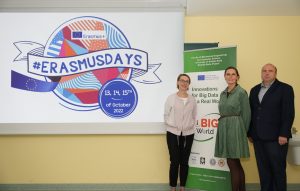
The Erasmus+ projects iBIGworld and “The Future is in Applied Artificial Intelligence” (FAAI) No  2022-1-PL01-KA220-HED-000088359 were presented on October 14, 2022, during the 6th Edition of #ErasmusDays at the University of Bielsko-Biala.

The basic aims and outcomes of the iBIGworld were reported by dr Aleksandra Klos-Witkowska.

In turn, Vasyl Martsenyuk paid attention to the basic work packages of the project FAAI.  The link to the presentation is below

ErasmusDays2022_FAAI


The Smart Skills for Smarter Cities – Prof. Georgi Dimitrov presented the possibilities of using the results of the iBigWorld project – 2020-1-PL01-KA203-082197. for optimal use of BigData capabilities.

The Smart Skills for Smarter Cities – Prof. Georgi Dimitrov presented the possibilities of using the results of the iBigWorld project – 2020-1-PL01-KA203-082197. for optimal use of BigData capabilities.

On 21.09.2022, at the Launchее Center, was held a discussion meeting in connection with the implementation of the Smart Skills for Smarter Cities (Skills4Cities) project, Erasmus+ No 2020-1-BG01-KA202-079071, related to the success and sustainability of the smart city.

During the event, was discussed the need for experts with new and upgraded competencies, knowledge, skills and abilities to effectively manage the digital transformation process.

In summary of the discussion, there was a main moment of the need for specialists with different competences and fields for the purpose of the higher efficiency of the smart city.

Among the number of experts invited to take part in the discussion was Prof. Georgi Dimitrov, who presented the possibilities of using the results of the iBigWorld project – 2020-1-PL01-KA203-082197. for optimal use of BigData capabilities according to project needs.

More information you can find here: https://www.linkedin.com/posts/hristov_focus-group-of-the-skills4cities-project-activity-6980064445725044737-xigr?utm_source=share&utm_medium=member_android

NodeJS and BigData

NodeJS and BigData

Nowadays, the Big Data can be found in most of modern organisation and companies. Its utilisation gives an advantage over competitors and allows to adapt to new trends. There is no surprise that established organizations, to follow a trend, are shifting to Node.js platforms from their legacy systems. Node.js is used by companies like PayPal, Yahoo, eBay, Netflix.

So, what is NodeJS?

Its real time web application using push technology over web sockets. It allows two-way connections (client and server). Advantage of Node.js is JavaScript language that makes easier to build both back-end and front-end using the same code. Node.js uses non-blocking, event driven I/O to offer efficiency and remain lightweight in terms of in-memory usage. It is especially effective processing multiple requests (with not high computing complexity) that makes it perfect tool for ingestion phase of Big Data pipelines.

You can find more info at article:

https://www.projectpro.io/article/10-reasons-why-you-should-use-nodejs/129

New MSc thesis concerning Big Data in UBB

New MSc thesis concerning Big Data in UBB

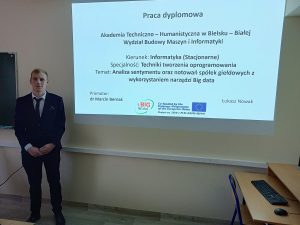
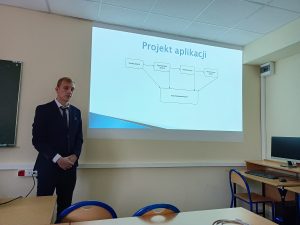
Today on University of Bielsko-Biala our graduate defend its MSc thesis.

The following publication ‘Sentiment and stock market analysis of listed companies using Big Data tools’ introduces the topic of Big Data with sentiment analysis. Big Data is having an increasingly important role in the modern world over time. With the help of huge data sets, many companies are able to predict customer demand and create personalised offers for them, or even react in advance to possible production failures. However, working with Big Data brings many challenges. Processing, storing and analysing huge sets of information requires special technologies to handle huge data records, as ordinary tools would not be able to handle such a amount of data.
One extensive source of Big Data is social networks. Users of such applications leave a lot of information about themselves, which is stored in extensive data stores, which correctly analysed, helps to present relevant offers, advertisements, information specifically personalised and designed exactly for the user.
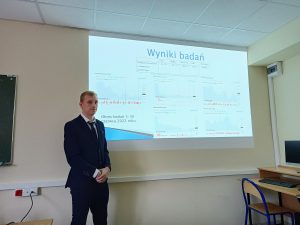
In this study, research was carried out analysing the impact of Twitter users’ online statements on the share prices of selected companies. The research work was carried out over a period of one month. Conclusions were also presented for each company analysed.
However, the result of the research does not indicate a direct connection between the sentiment of the users’ statements and the increase or decrease in the value of the shares of the companies in question on the stock exchange. With such a complex process as stock market asset valuation, it should also be analysed with other factors, such as company valuations or the current global economic situation, which sets further directions for future work.

contact: lukasz1081@wp.pl


Multiplier Event E1

Multiplier Event E1

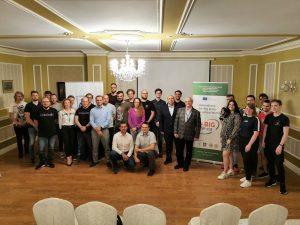
Multiplier Event E1 has been an integral part of the iBIGworld project’s dissemination and exploitation of results activities. Therefore, we’ve hosted successive event E1 as the Transnational Conference “State-of-the-Art on Big Data: challenges, competencies, and requirements” at 07.06.2022, Hotel “Na Bloniach”, Bielsko-Biala, Poland

The aim of the event was to communicate the activities and results of the project within a wider audience consisting of stakeholders and members of target groups. As BigData is cutting edge technology issues that affect everyone, the event also aimed to elaborate on all new perspectives and challenges in the sector that are identified by the European, academic, vocational and expert communities. The speakers were carefully selected in order to encompass an integrated view of all sectors, showing evidence of the interaction between them.

For the event we’ve managed to gather a total number of  participants over 60,  locals over 50 and internationals over 5. We’ve had local participants mainly from local SMEs specializing in the field of Big Data and participants from Ukrainian HEIs who were visiting UBB.

For the event we’ve had the following objectives:

  • to promote and demonstrate the results of the iBIGworld project
  • to raise awareness about the benefits of Big Data technology as innovation domain for business
  • to promote Big Data innovation amongst SMEs
  • to explain the concepts of Big Data innovation
  • to present iBIGworld results: the matrix competencies-topics in the field of Big Data, the eLearning platform for training in Big Data using competence-based approach and use case study, and the Smart BigData Job Hub platform
  • to encourage public dialogue around the Big Data concept between business managers and trainers


The targeted public was made up of the following categories:

  • SMEs representatives (staff and management), especially members of the Transilvania IT cluster, managed by ARIES Transilvania
  • Big Data experts, consultants, project managers
  • VET training centers interested to promote the training in Big Data
  • Academics from Management, Technology, and Social sciences
  • Other stakeholders such as clusters and associations

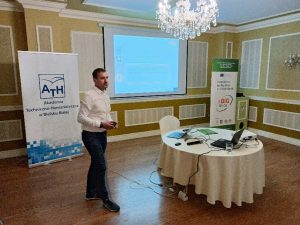
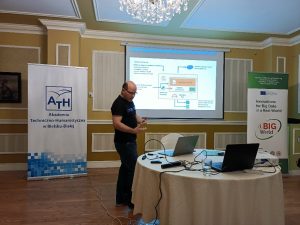
Dean of the Faculty of Mechanical Engineering and Computer Science for Education dr Dariusz Więcek has started the event. He has greeted the event participants on behalf of UBB authorities. The head of the department of Computer Science and Automatics prof. dr hab. Mikolaj Karpiński presented the academic and research facilities of the department. Dr Marcin Bernaś has introduced the participants to the world of Big Data, presented the basic notions and challenges considered. The local coordinator of the project prof. dr hab Vasyl Martsenyuk presented the project’s general objectives, target groups, and outcomes of the stage O1 focusing on survey analysis. Then dr Marcin Bernas has presented the outcomes of the stage O2 joining the Data Science competencies with the topics of the Big Data course oriented to use case study. Prof. Georgi Dimitrov from ULSIT (Bulgaria) has reported remotely on the expierience when developing Big Data framework implemented as a eLearning platform which includes 12 sequential topics strengthened with various learning activities and use cases from real world. Then prof. dr hab. Vasyl Martsenyuk presented the approach when developing the teacher and business guidelins for Big Data training course as the main outcomes for the stage O4: Piloting. Dr Marcin Bernaś offered the platform for Smart BigData Job Hub (https://ibigworld.ath.edu.pl/index.php/en/). It will enable to dissemination, mainstreaming, and sustaining the most relevant results of the project. By delivering, disseminating and fully operating the Smart BigData Job Hub platform, iBIGworld facilitates access to information which is relevant to Big Data employability opportunities, creates closer links between business and community, eases transition to workforce and contributes to the creation of a sustainable learning community that identifies Big Data cutting-edge industrial needs enabling the reforming of academic curricula.

The students team which participated in C3 has also presented the project that was implemented as a result of C3 and devoted to developing Orange+Kaggle+Python platform for Big Data in a real case.

Expert Panels were devoted to presenting some good practices in Big Data which could be also involved as use cases from real world to the project. Da Vinci firm presented two IT solutions based on Big Data. Da Vinci medicine caused the real interest and discussion among the participants. The company Precisely focused the attention on microservices vs monolith architecture when developing Big Data solutions. They presented their own paradigmat when developing effective code for microservices using functional programming. Record SI has paid the attention of the participants by the presentation its worth expierience when developing Big Data solutions for local governments in Poland during the decades of years. Currently they offer platform which is fully web-integrated with great facilities for data extraction and visualising.